
Mark Eade
Key Mortgage Partners
Contact Info:
About
Languages:
Awards and Certifications:

National Performance Award

Elite Hall of Fame Recognition
Our Lenders




Blog

A Mortgage That Pays you?
November 13, 2026
Yes, it's possible! Unlike a traditional mortgage where you make regular payments to a lender, a reverse mortgage allows eligible homeowners aged 55 and older to access some of the equity they've built in their homes, without having to sell or make regular monthly mortgage payments.
For many Canadians approaching or enjoying retirement, their home is one of their most valuable assets. A reverse mortgage offers a way to turn some of that accumulated equity into accessible funds, providing greater financial flexibility while allowing them to continue living in the home they love.
What Is a Reverse Mortgage?
A reverse mortgage is a type of loan available to Canadian homeowners aged 55 and older. It allows eligible homeowners to borrow against a portion of their home's equity without having to sell their property. Unlike a traditional mortgage, a reverse mortgage generally doesn't require regular monthly principal or interest payments. Instead, interest is added to the outstanding loan balance over time.
The mortgage is typically repaid when the home is sold, the borrower permanently moves out or the last borrower passes away, subject to the lender's terms. Throughout the arrangement, you continue to own your home, provided you meet the obligations outlined in your mortgage agreement.
How Much Money Can You Access?
The amount available through a reverse mortgage depends on several factors, including:
- Your age and, if applicable, your spouse's age
- The appraised value of your home
- The location and type of property
- The lender's qualification requirements
In Canada, eligible homeowners may be able to access up to 55% of their home's value through certain reverse mortgage products. However, the maximum amount isn't available to everyone, and the amount you qualify for will depend on your individual circumstances and the lender's guidelines.
If you have an existing mortgage or other loans secured against your home, those debts will generally need to be repaid from the reverse mortgage proceeds. This means the amount of cash you actually receive may be less than the total amount you're approved to borrow.
What Can You Use the Money For?
One of the appealing features of a reverse mortgage is the flexibility it offers. Homeowners may choose to use the funds for a variety of purposes, including:
- Supplementing retirement income: Additional funds can help cover everyday living expenses or provide greater financial flexibility.
- Paying off existing debts: Some homeowners use a reverse mortgage to eliminate an existing mortgage or consolidate other outstanding debts.
- Making home improvements: Renovations, repairs and accessibility upgrades can help make a home more comfortable and suitable for changing needs.
- Covering unexpected expenses: Accessing home equity may provide funds for significant expenses that weren't part of the original retirement plan.
- Helping family members: Some homeowners choose to use part of their equity to provide financial assistance to children or grandchildren.
How the money is used is generally up to the homeowner, subject to the mortgage agreement. Whether you're looking to reduce monthly financial obligations, make improvements to your home or simply enjoy greater financial flexibility, a reverse mortgage may provide an opportunity to put some of your accumulated equity to work.
Do You Still Own Your Home?
Yes. One common misconception about reverse mortgages is that the lender takes ownership of your property. That's not how a reverse mortgage works. You remain the registered owner of your home and can continue living there, provided you meet the terms of the mortgage agreement.
These obligations typically include maintaining the property, keeping property taxes up to date and maintaining appropriate home insurance. It's important to understand these responsibilities before proceeding, as failing to meet the mortgage conditions could result in the lender requiring repayment.
Do You Have to Make Monthly Payments?
One of the key differences between a reverse mortgage and a traditional mortgage is the repayment structure. With a traditional mortgage, you generally make regular payments that cover interest and, in many cases, reduce the principal balance. With a reverse mortgage, regular monthly principal and interest payments are generally not required. Instead, interest accumulates and is added to the amount owing.
This can provide additional monthly cash flow, but it also means the mortgage balance increases over time. As the balance grows, the equity remaining in your home may decrease, depending on changes in the property's value. Some reverse mortgage products may also allow voluntary interest payments, which can help manage the growth of the outstanding balance.
What Are the Costs of a Reverse Mortgage?
Like other mortgage products, reverse mortgages come with costs. These may include interest, appraisal fees, legal expenses and lender administration fees. Reverse mortgage interest rates are also generally higher than rates for comparable traditional mortgages.
Because interest is added to the outstanding balance, the total amount owing can grow significantly over a longer period. It's important to consider these costs alongside the benefits of accessing your home equity and to understand how the outstanding mortgage balance may affect your future financial plans.
What Happens When the Home Is Sold?
When the property is sold, the reverse mortgage is repaid from the sale proceeds. Any remaining equity belongs to the homeowner or, in the event of death, their estate. If the homeowner passes away, the mortgage will generally need to be repaid according to the lender's terms, often through the sale of the property or another source of funds.
Some reverse mortgage products include protections designed to ensure borrowers don't owe more than the fair market value of their home, provided they meet their mortgage obligations. The exact terms and protections vary by lender, so it's important to review these details carefully before making a decision.
Is a Reverse Mortgage Right for Everyone?
Not necessarily. A reverse mortgage can be a useful financial tool, but it isn't the only way to access home equity. Depending on your circumstances, alternatives might include a home equity line of credit, traditional refinancing, downsizing or other financial arrangements. Each approach has advantages, disadvantages and different qualification requirements.
The right choice depends on your income, financial goals, available equity and long-term plans. For some homeowners, the ability to access funds without regular monthly mortgage payments may be particularly appealing. For others, preserving as much home equity as possible or minimizing borrowing costs may be a greater priority.
Explore the Possibilities Your Home Equity Can Offer
After years of building equity in your home, you may have more financial flexibility than you realize. A reverse mortgage can offer eligible homeowners a way to access some of that equity without selling their property or taking on regular monthly mortgage payments.
Understanding the benefits, costs and obligations is the first step toward deciding whether this type of financing makes sense for you.
Contact Mark to learn more about reverse mortgages and discuss whether this type of financing could fit your retirement plans.
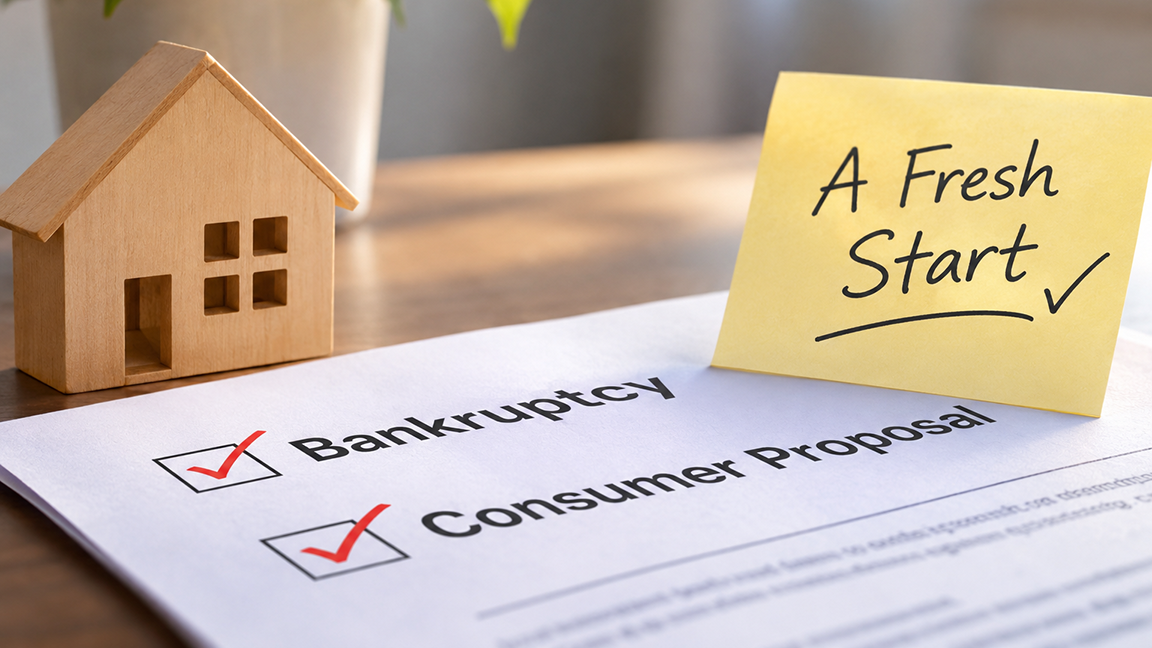
Bankruptcy Doesn't Have to End Your Homeownership Dreams
November 13, 2026
If you've experienced bankruptcy or filed a consumer proposal, you might be wondering whether homeownership is still within reach. The good news is that financial difficulties in your past don't necessarily have to stand in the way of your future.
While bankruptcy and consumer proposals can affect your ability to qualify for a mortgage, there are lenders who understand that financial circumstances change. Whether you're hoping to purchase a home or refinance an existing property, you may have more options than you realize.
How Does Bankruptcy Affect Your Ability to Get a Mortgage?
When you apply for a mortgage, lenders review several aspects of your financial situation, including your credit history, income, existing debts and down payment. A bankruptcy can significantly affect your credit rating and remain on your credit report for several years. This can make qualifying with a traditional bank more challenging. However, not all lenders assess mortgage applications the same way. Alternative and private lenders may be willing to consider applicants with a history of bankruptcy, depending on their current financial circumstances, available equity or down payment, and ability to repay the mortgage.
The important thing to understand is that bankruptcy doesn't automatically mean you can't qualify for mortgage financing.
How Soon After Bankruptcy Can You Get a Mortgage?
There's no single waiting period that applies to every mortgage lender. Some traditional lenders may require you to have been discharged from bankruptcy for a certain period and to have re-established a positive credit history before considering your application. Alternative lenders, however, may offer greater flexibility and may be willing to consider applications sooner, depending on your circumstances.
Factors that can influence your eligibility include:
- Whether you've received your bankruptcy discharge
- How much time has passed since your discharge
- Your credit history since the bankruptcy
- Your current income and employment stability
- Your available down payment or home equity
- The amount of debt you currently carry
Rather than assuming you need to wait several years, it's worth speaking with a mortgage professional who can assess your situation.
What If You've Filed a Consumer Proposal?
A consumer proposal is different from bankruptcy, but it can also affect your credit rating and ability to obtain mortgage financing. If you're currently making payments under a consumer proposal, traditional mortgage financing may be more difficult to obtain. However, depending on your circumstances, alternative financing may be available. If you've completed your consumer proposal, lenders will generally want to see evidence that you've been managing your finances responsibly since completion. Rebuilding your credit, maintaining stable income and reducing outstanding debt can all help strengthen your mortgage application.
How Much Down Payment Will You Need?
The amount of down payment required will depend on the type of lender, the property and your overall financial circumstances. While borrowers with strong credit may qualify for mortgages with relatively small down payments, those who have experienced bankruptcy or a consumer proposal may be required to provide a larger down payment to offset the lender's risk. If you already own a home, the equity you've built in your property may also play an important role when exploring refinancing solutions. Because requirements vary between lenders, it's worth reviewing your circumstances with a mortgage professional to determine which financing solutions may be available to you.
Will Your Mortgage Interest Rate Be Higher?
It's possible that you'll pay a higher interest rate following bankruptcy or a consumer proposal, particularly if you're obtaining financing through an alternative or private lender. These lenders generally take on greater risk by accommodating borrowers who don't meet traditional lending guidelines, and their interest rates and fees often reflect that additional risk. However, this doesn't necessarily mean you'll be paying a higher rate forever. For some borrowers, alternative financing can provide a temporary solution while they rebuild their credit and improve their financial position, potentially allowing them to qualify for more competitive mortgage products in the future.
What Can You Do to Improve Your Chances?
If you're considering applying for a mortgage following bankruptcy or a consumer proposal, there are practical steps you can take to strengthen your financial position.
- Rebuild your credit. Making payments on time and using credit responsibly can help establish a more positive credit history.
- Keep your debt manageable. Reducing outstanding balances can improve your overall financial profile.
- Maintain stable income. Lenders want to see that you have a reliable source of income to support your mortgage payments.
- Save for a down payment. Having more money available for a down payment may increase the number of mortgage solutions available to you.
- Get professional advice early. Understanding what lenders are looking for can help you avoid unnecessary applications and focus on realistic financing solutions.
Your Financial Past Doesn't Have to Define Your Future
Experiencing bankruptcy or a consumer proposal can be stressful, but it doesn't mean your homeownership goals are permanently out of reach.
Mortgage financing isn't one-size-fits-all. There are lenders and mortgage solutions designed to accommodate borrowers whose circumstances don't fit traditional lending guidelines.
Whether you're looking to purchase a home, refinance an existing mortgage or simply understand what's possible, getting the right advice is a good place to start.
Contact Mark to discuss your situation and learn what mortgage solutions may be available to you.

Self-Employed? You Have Mortgage Options!
November 13, 2026
Here's What You Should Know About Getting a Mortgage as a Self-Employed Borrower
Being your own boss comes with plenty of advantages. You make your own decisions, build your own business and enjoy the rewards of your hard work. But when it comes to qualifying for a mortgage, being self-employed can sometimes make things a little more complicated.
That's because traditional mortgage lenders often rely heavily on the income reported on your tax returns. And as many business owners know, the income you report for tax purposes doesn't always tell the whole story. Fortunately, there are mortgage solutions designed specifically for entrepreneurs and self-employed Canadians.
Why Is It Sometimes Harder for Self-Employed Borrowers to Qualify?
For salaried employees, verifying income is usually relatively straightforward. A recent pay stub, employment letter and tax documents may be enough to demonstrate consistent earnings. For self-employed individuals, however, income can be more difficult to assess because business owners often deduct legitimate business expenses to reduce their taxable income. While this makes sense from a tax-planning perspective, it can create challenges when applying for a mortgage.
For example, you might operate a successful business that generates substantial revenue, but your personal tax return may show a relatively modest net income. Traditional lenders may use that lower reported income when calculating how much you can afford to borrow. As a result, you could find yourself qualifying for a smaller mortgage than you expected, even though your business is financially successful.
What Do Mortgage Lenders Look For?
When reviewing a self-employed mortgage application, lenders typically want to understand the stability and sustainability of your income. Depending on the lender and mortgage program, they may consider:
- How long you've been self-employed
- Your business revenue and profitability
- Your personal income and credit history
- Existing debts and financial obligations
- Your available down payment
- The type of business you operate
- Your overall financial position
Some lenders place significant emphasis on your reported taxable income, while others may take a broader approach. The key is finding a mortgage program that appropriately reflects your financial circumstances rather than trying to fit your income into traditional lending requirements that may not accurately represent your business.
What Is a Business-for-Self Mortgage?
A Business-for-Self (BFS) mortgage is designed to accommodate borrowers who earn income through self-employment rather than traditional salaried employment. These programs may offer alternative ways to verify income, depending on the lender. For example, some lenders may consider business bank statements, gross revenue or other financial documentation when assessing an application, while others may permit certain adjustments to reported income to account for eligible business expenses.
It's important to understand that BFS mortgages aren't all the same. Documentation requirements, qualification guidelines, interest rates and down payment requirements can vary considerably between lenders. Working with a mortgage professional who understands these programs can help you identify financing solutions that are better suited to your particular circumstances.
Can You Get a Mortgage With Less Than Two Years of Self-Employment?
Many traditional mortgage programs prefer applicants to have an established history of self-employment, often supported by two years of financial documentation. However, that doesn't necessarily mean someone who has recently started a business is automatically ineligible. Some lenders may consider applicants with a shorter self-employment history, particularly if they have previous experience working in the same industry or can demonstrate consistent earnings.
Other factors, such as your credit history, available down payment and overall financial strength, may also influence the lender's decision. If you've recently transitioned from employment to self-employment, it's worth exploring your options before assuming you need to wait two years to qualify.
How Much Down Payment Do You Need?
Self-employed borrowers may qualify for mortgages with relatively small down payments under certain traditional lending programs, provided they meet the applicable income verification, credit and mortgage insurance requirements. However, alternative lending programs may require larger down payments, particularly when income cannot be verified using conventional methods.
The amount required will depend on the lender, property type, purchase price and your overall financial profile. A larger down payment may provide additional flexibility and access to more lending solutions, but it isn't necessarily required for every self-employed mortgage application.
What Documents Should You Prepare?
Having your financial information organized can make the mortgage application process smoother and help lenders develop a clearer picture of your financial circumstances. Depending on your business structure and the lender's requirements, you may be asked to provide:
- Personal income tax returns
- Notices of Assessment from the CRA
- Business financial statements
- Business bank statements
- Proof of business registration or incorporation
- Documentation confirming your down payment
- Details of existing loans and financial obligations
Not every lender requires the same documents, and some specialized mortgage programs may offer more flexible income verification options. Your mortgage professional can help determine which documentation is necessary based on the financing solution being considered, saving you time and helping you prepare a stronger application.
Should You Speak With a Mortgage Professional Before Applying?
One of the biggest advantages of working with a mortgage professional is access to a variety of lenders and mortgage programs. Rather than approaching a single bank and hoping your income meets its requirements, you can explore financing solutions that may be better suited to how you earn your living. This can be particularly valuable for business owners with fluctuating income, significant business deductions or more complex financial arrangements.
Speaking with a mortgage professional early in the process also gives you an opportunity to understand your borrowing capacity, identify potential challenges and determine what documentation you'll need before you start shopping for a home.
Your Business Doesn't Have to Fit Into a Traditional Lending Box
You've worked hard to build your business, and your mortgage application should reflect more than a single number on your tax return. Mortgage financing isn't one-size-fits-all, and there are solutions specifically geared toward the unique income circumstances of entrepreneurs. Whether you're purchasing your first home, moving to a larger property or refinancing an existing mortgage, the right financing solution starts with understanding your business and your goals.
Contact Mark to discuss your circumstances and find out which mortgage solutions may work for you.

Stay Connected
Stay in touch to ensure that you get the best rates, always!